
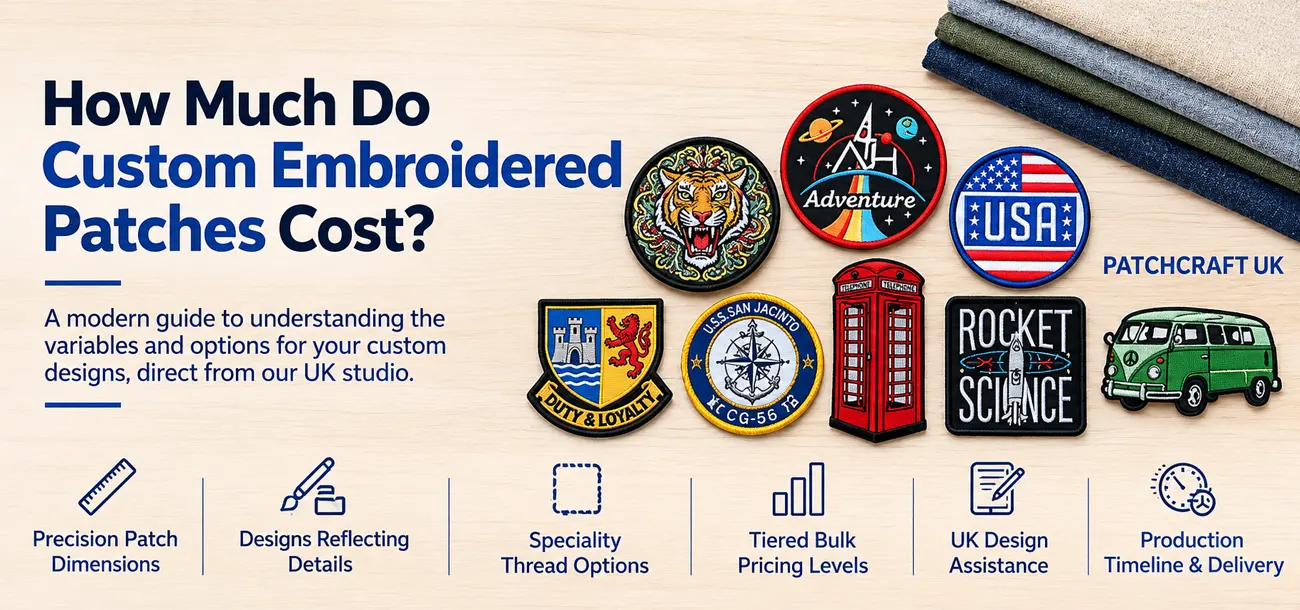
Custom embroidered patches are fabric badges created by stitching personalised logos, text, or artwork using coloured threads onto base material like twill or felt.
They are a practical way to add identity, branding, or a personal touch to your clothing or accessories. They can be used on jackets, uniforms, bags, hats, sportswear, and promotional items. But before placing an order, the first question that comes up is: how much will custom embroidered patches cost in the UK?
The embroidered patches cost UK cost depends on several factors rather than a fixed price. Patch size, order quantity, design complexity, thread coverage, and backing and finishing options can all change the final quote. Hence, understanding these factors makes it easier to compare suppliers and choose specifications that fit your budget.
Whether you need custom patches for school, a small business, or a clothing brand, this guide explains what goes into the price of embroidery patches in the UK and how you can get good value without compromising on quality.
What Affects the Cost of Custom Embroidered Patches?
There is no fixed price for embroidery patches because every order can have different requirements.
For example, a small, simple patch order in bulk will naturally cost less than a large, highly detailed patch in a small quantity.
For custom embroidered patches UK, the main factors that can affect the price are:
- Patch size: Larger patches require more material, thread, and production time.
- Shape: Standard shapes are simpler to manufacture, while unusual outlines often need additional preparation.
- Number of colours: Embroidered patches that use several colours may take longer to produce.
- Embroidery coverage: A lightly embroidered design uses less thread than one with dense stitching across the entire patch.
- Design complexity: Fine details, small lettering, and intricate logos can increase stitch counts and production time.
- Backing: Iron-on, sew-on, and Velcro backings have different costs and applications.
- Order quantity: Larger orders usually reduce the cost per individual patch.
The above factors are the reasons why a supplier always asks you for artwork, dimensions, quantity, and preferred backing before providing an accurate quote.
How Patch Size Influences Pricing
Size is one of the essential factors to understand when looking at embroidered patch pricing. A larger patch generally requires more material, fabric, and thread compared to small patches.
Small Patches
Small patches are useful for simple logos, badges, and subtle branding. They work particularly well on shirt pockets, caps, bags, and other smaller garments.
Medium-Sized Patches
Medium-sized patches offer more space for lettering, symbols, and moderately detailed artwork. They are the best choice for jackets, uniforms, sportswear, and motorcycle club clothing.
Large Patches
Large patches have enough room for design. But they also need more time for stitching and production. In addition, large patches are often chosen for the back of jackets, promotional garments, or statement designs.
Furthermore, the best design is not necessarily the smallest. If reducing the dimensions makes lettering difficult to read or compromises your artwork, saving money on size is not the best idea.
How Order Quantity Affects Cost
How Many Embroidered Patches Should You Order? In most cases, the quantity can have quite an effect on the total cost of the embroidered patches in the UK. Manufacturers have some setup processes in production that could be shared over several pieces if you order in bulk.
For example, ordering a handful of patches for a small project may result in a higher cost per patch. Ordering hundreds for businesses, educational institutions, or motorcycle clubs can bring the unit price down.
This makes custom patches UK the best option for organisations that need consistent branding across multiple items.
Bulk orders can be particularly useful for:
- Schools and colleges,
- Clothing and fashion companies,
- Sports teams,
- Clubs and organisations,
- Promotional campaigns,
- Events and conferences,
- Security and workwear supplies.
Does Design Complexity Increase the Price?
Yes, the complexity of your artwork can influence the final cost of custom embroidered patches in the UK.
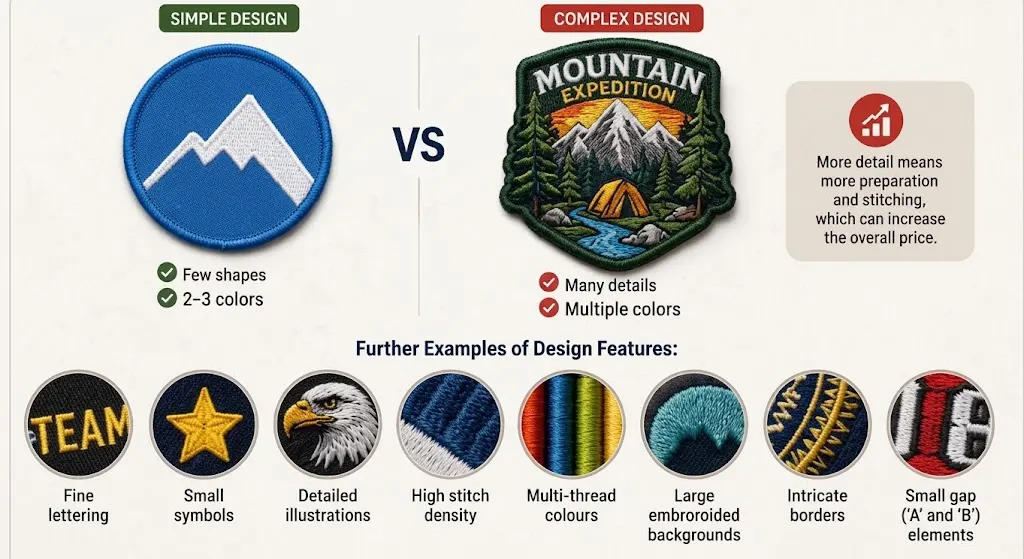
For example, A simple badge might contain a few bold shapes and two or three colours. Another design might require small lettering, detailed illustrations, and multi-coloured embroidery.
Which one would cost more?
The second design generally requires more preparation and stitching.
Furthermore, design features that can influence production include:
- Fine lettering
- Small symbols
- Detailed illustrations
- High stitch density
- Multi-thread colours
- Large embroidered backgrounds
- Intricate borders
- Small gaps between design elements
Why Stitch Count Matters
Stitch count refers to the number of stitches needed to create the embroidered artwork. It is one of the most important production considerations because a design with more stitches generally takes longer to embroider.
This does not mean that you should remove every detail from your design. Instead, ask whether each detail will remain visible when it is translated from a digital image into thread.
Choosing the Right Backing
The best backing depends on where the patch will be used and whether you want it to be permanent, removable, or easy to apply.
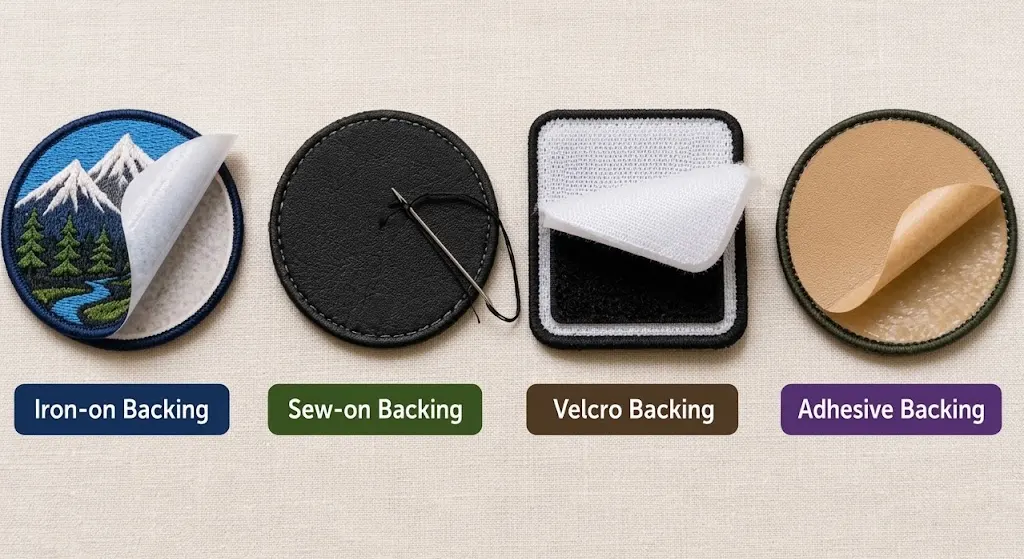
Iron-on Backing
Iron-on backing uses heat to attach the patch to suitable fabrics.
This backing option is convenient for jackets, bags, and some garments where quick application is needed. However, always check that the fabric can safely tolerate the heat.
Sew-On Backing
Sew-on patches are directly attached to the garment using thread.
They are a dependable choice for uniforms, jackets, workwear, and other items that need a secure attachment.
Velcro Backing
Velcro backing is a two-sided fastening system attached to the back of the items. These can be removed and replaced. Also, this backing is useful where interchangeable badges or branding is required.
This type of backing can be specifically useful for certain uniforms and equipment.
Adhesive Backing
Adhesive backing is a layer of glue or sticky material on the back of an item. It is best for temporary applications and promotional uses.
Adhesive backing can be convenient for events or items where permanent stitching or heat is not suitable.
Because these options use different materials and application methods, ask your supplier whether your preferred backing is included in the quoted price.
Additional Costs to Consider
The patch price may not always represent the complete cost of your order. So before approving a quotation, check whether additional prices are included.
Artwork Digitisation
Embroidery machines do not simply stitch a standard image file. Artwork normally needs to be converted into an embroidery-ready format. This process is known as digitisation.
Some suppliers include digitisation in their service, while others may charge a separate fee for it.
Delivery Charges
Ensure you check whether the delivery charges are included in the quotation. This cost can depend on the order size, delivery speed, and location.
Express Production
If you need your patches urgently, you must opt for the express service. However, it charges more than the standard production cost.
The best way to avoid this unnecessary additional cost is to plan your order early.
Special Thread
Metallic, glow-in-the-dark, neon or other special threads provide a distinctive appearance. But it may increase the cost compared to standard thread.
A useful question to ask your supplier is: “Does this quotation include digitisation, backing, and delivery?” The supplier’s answer will give you a clear picture of the pricing.
How to Save Money When Ordering Embroidered Patches
The best way to save money when ordering custom embroidered patches is to order an appropriate quantity, avoid unnecessary design complexity, and choose specifications that suit your application.
Here is how you can control your budget:
Order the right quantity: if you know that you will need the same designs regularly, then you must compare prices for different quantities. A larger order can reduce the cost per patch.
Avoid unnecessary detail: simplifying tiny elements will not be visible in embroidery. You can reduce stitch complexity while making the final patch readable.
Use a practical shape: Larger patches are not always better. So choose dimensions based on where the patch will be placed and how it needs to be viewed.
Prepare your artwork: Good artwork can make the digitisation process easier. You can consult a designer for a clean and high-quality file before requesting a quotation.
Avoid last-minute orders: If you can plan, standard production is often preferable to paying for an express service.
These are the simple decisions that can help you get good value from personalised embroidered patches without making the design look cheap or unfinished.
Why Choose Embroidery Patches UK?
When choosing embroidery patches UK suppliers, customers should consider both product quality and the overall ordering experience.
Embroidery Patches UK offers customisation options to customers who need patches for branding, clothing, uniforms, motorcycle clubs, sports teams, events and promotional campaigns.
The value of working with an experienced supplier is not about receiving a low quotation. It is also about getting hands-on guidance on the artwork, sizing, embroidery, and backing before production begins.
A reliable supplier should be able to help customers understand:
- Which patch size suits your application,
- How your artwork will translate into embroidery,
- Which backing is more appropriate,
- Whether bulk pricing is available,
- What production time to expect,
- What is included in the quotation.
For businesses that require logo patches UK businesses must reach out to us to maintain their consistent branding across different garments, such as jackets, uniforms, bags, and other merchandise.
The important point is to consider the overall value of the order rather than focusing only on the lowest price per patch. A slightly cheaper patch may not represent good value if the embroidery quality, backing, or customer service falls short of your requirements.
Conclusion
The Embroidered Patches Cost UK depends on much more than the number of patches you order. Size, stitch count, design complexity, embroidery coverage, backing, quantity and additional services can all influence the final quotation. Understanding these factors allows you to compare suppliers more fairly and choose specifications that suit your budget.
For many businesses, clubs and organisations, ordering in bulk can reduce the cost per patch. At the same time, keeping artwork practical and choosing the right size and backing can avoid unnecessary production costs.
Before placing an order, ensure you provide clear artwork, explain how the patches will be used, and ask what the quotation includes. Also, when comparing Embroidery Patches UK, look for a supplier that offers clear communication, consistent quality and dependable production alongside competitive pricing. That combination can provide much better value than simply choosing the cheapest quote.

0 Comments on “How Much Do Custom Embroidered Patches Cost?”